2025 Wood Materials Joinery in Traditional Chinese Handicraft Materials research achievements release
“木的连接”是感物独家支持融设计图书馆并参与共同研究的“传统手工艺材料之木材料研究”五年计划中,继“木的切割”、“木的自然染色”、“木与大漆”、“木与雕版”之后,第五年也是最后一年的研究主题。研究主要归纳和解读中国传统木材料营造技艺中木头的不同连接方式,探寻其当代设计意义。
"Wood Joinery" is the fifth and final year's research theme in the five-year "Traditional Craft Material: Wood" plan, exclusively supported by Ugan concept and co-researched with the Rong Design Library, following previous studies on "Wood Cutting," "Wood Dyeing," "Wood and Lacquer," and "Wood and Engraving." This research primarily categorizes and interprets the various joinery techniques in traditional Chinese wood construction, exploring their significance for contemporary design.

The Wisdom of Joinery in Traditional Chinese Woodcraft
“木的连接”是将单体木材料组合成结构的方法,是中国传统制木中不可或缺的环节。连接技艺可以让木头克服本身的尺寸限制,满足多种构造和装饰的需求;不同类型的木作技艺也会使用不同的连接方式。与主要靠胶水、螺栓或钉子等连接件来固定连接的现代工业木制品不同的是,中国传统制木方法中的很多连接都是用木头本身来完成的,偶尔以钉、绳等作为辅助。这其中包含着独特的传统工艺智慧,一直传承至今天还在使用。
"Wood Joinery" refers to methods of assembling individual wood pieces into structures, an indispensable aspect of traditional Chinese woodworking. These techniques allow wood to overcome its inherent size limitations, meeting diverse structural and decorative needs. Different types of woodworking employ different joinery methods. Unlike modern industrial wood products that primarily rely on adhesives, bolts, or nails for fixation, many connections in traditional Chinese woodcraft are made using the wood itself, occasionally assisted by nails or ropes. This embodies a unique traditional craft wisdom that continues to be used today.


Classification of Wood Joinery Forms
融设计图书馆和感物在全国多地进行了相关的探访和考察,记录了多个地区不同的传统制木技艺及其所采用的连接方式。经过研究,我们将宏观上的木的连接形式归纳为两种,包括立体形式和平面形式。立体形式的连接主要是三维层面的搭建,包括构造、叠垒、组合、编木、转向、咬合、轴转等;平面形式则是二维层面的拼合或延展,主要包括拼合、接长、合圈等。不同的连接形式一般会搭配榫、绑、穿、钉等具体的连接方法。
Through field visits and investigations across numerous regions in China, the Rong Design Library and Ugan concept have documented various traditional woodworking techniques and their respective joinery methods. The research broadly categorizes wood joinery forms into three-dimensional and two-dimensional types. Three-dimensional forms involve spatial construction, including construction、stacking、jointing、weaving、redirection、interlocking and rotation. Two-dimensional forms involve planar splicing or extension, primarily including assembly,end to end joint and joint ring. Different joinery forms are typically paired with specific methods like mortise-and-tenon, binding, piercing, and nailing.
立体连接之 构造、叠垒与组合
Three-dimensional Joinery: Construction , Stacking and Jointing
“构造”“叠垒”“组合”均是由多个小的独体构件搭建成立体结构的连接方式,在中国传统木作技艺中从大木作到小木作都有着广泛的运用。代表性的“构造”连接如侗寨鼓楼。这是一种具有侗族文化特色的木构建筑,起源于中国古代南方地势低洼、山林环绕的地区“构木为巢”的巢居式生活方式。
Construction, Stacking and Jointing are all methods of building three-dimensional structures from multiple small, independent components, widely used in traditional Chinese woodcraft, from major carpentry (large-scale structures) to minor carpentry (smaller objects). A representative example of "Construction" is the Dong Village Drum Tower. This wooden structure, characteristic of Dong culture, originates from the nest-dwelling lifestyle in ancient southern China's low-lying, forested areas.
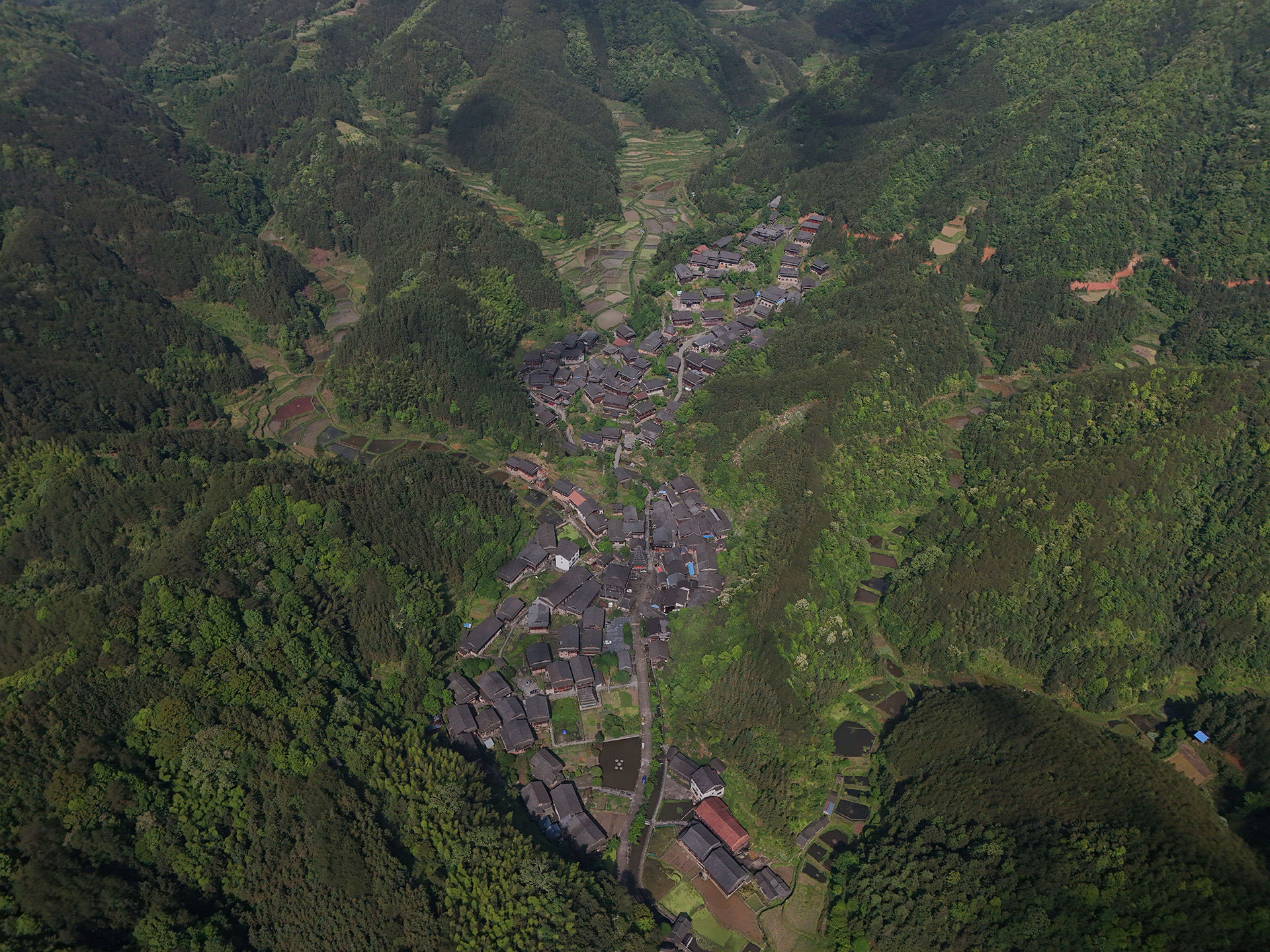
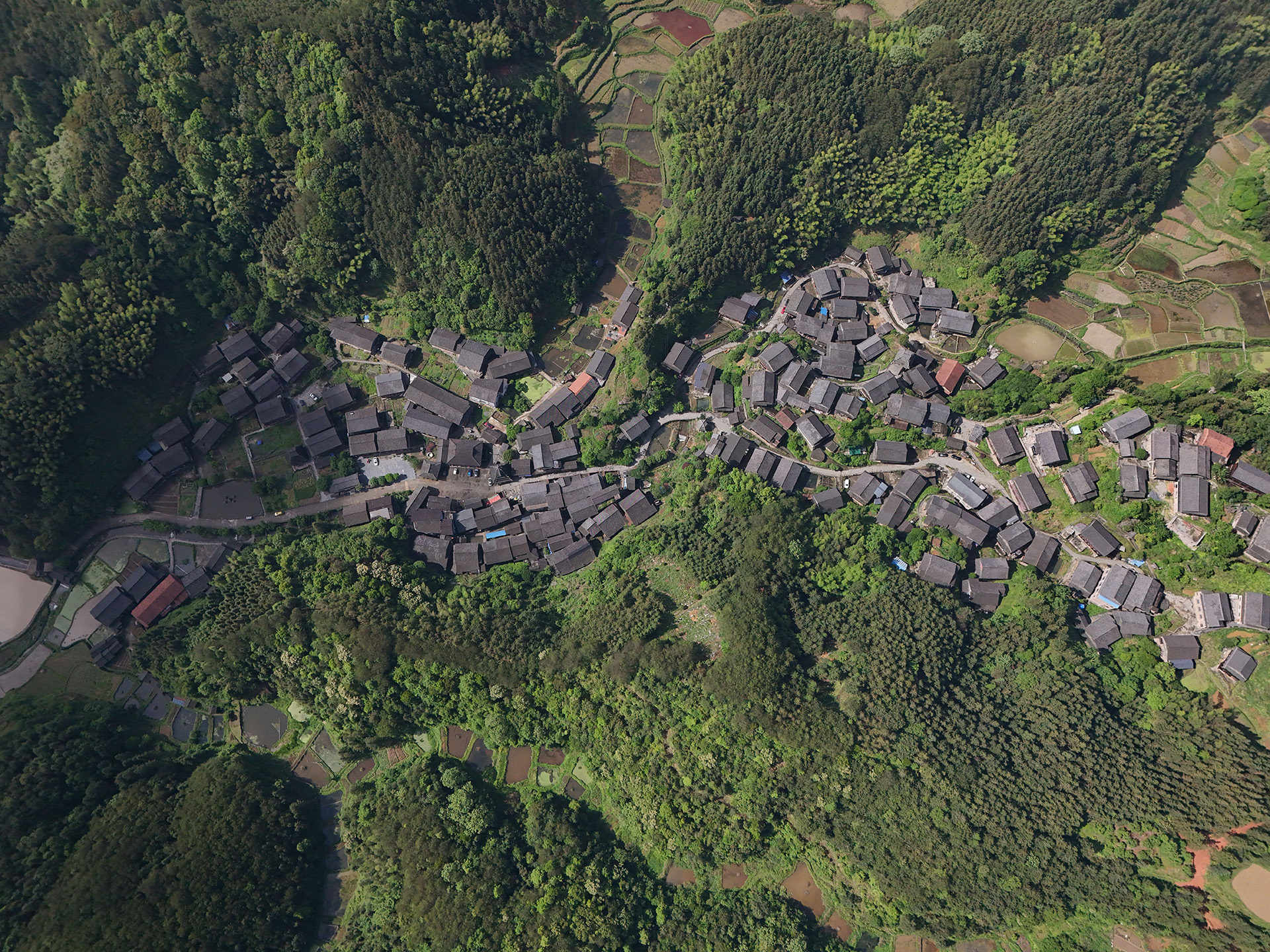

鼓楼的搭建主要使用当地盛产的杉木——当地人也将杉树视为可以庇荫的神树,鼓楼本身的造型也参照了杉树的形态。
The drum tower is primarily built using locally abundant fir wood—considered a sacred, protective tree by the locals—and its shape resembles a fir tree.
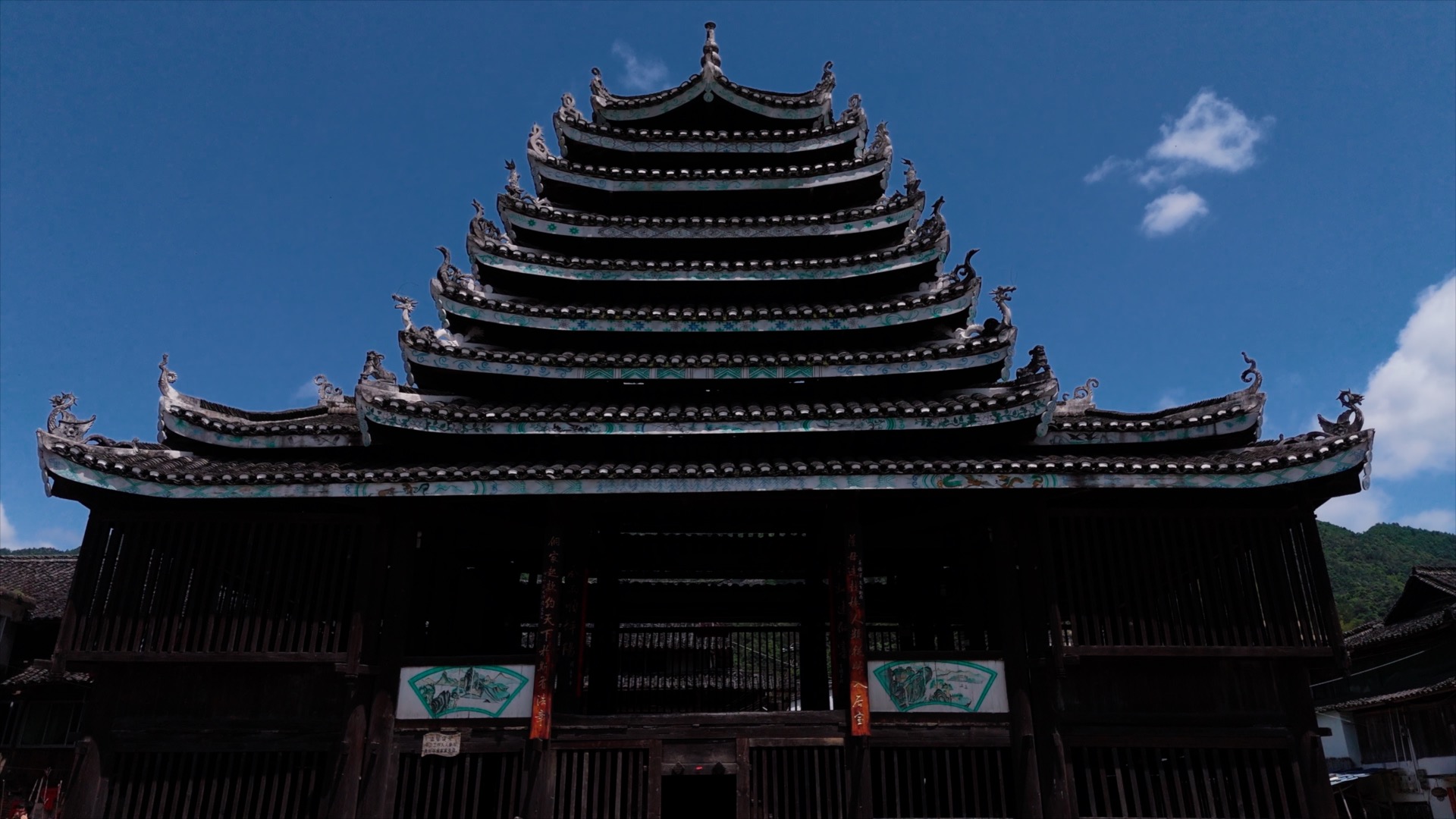
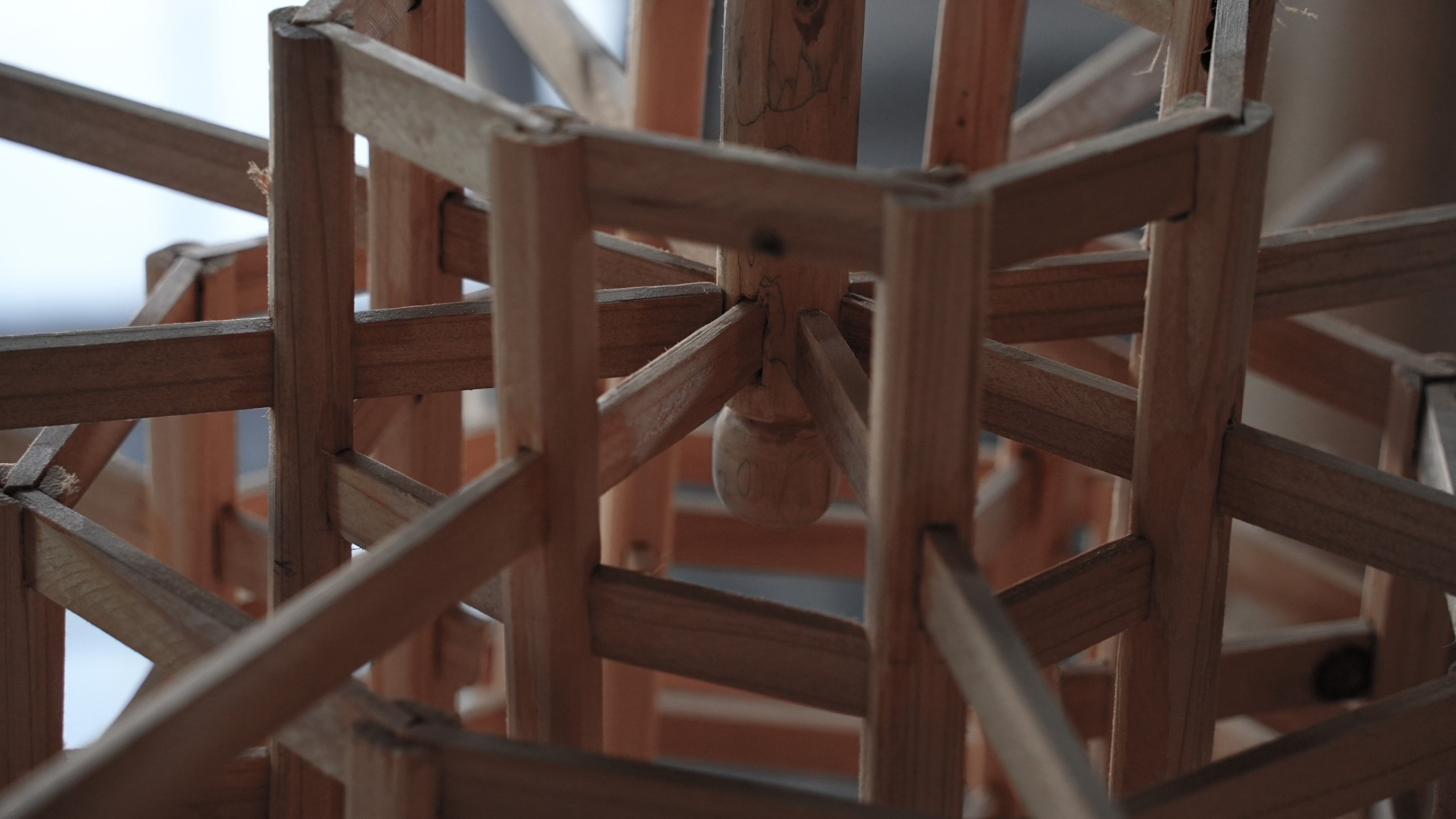
在结构连接的具体方法上,鼓楼通体不用钉,仅用巧妙的榫卯结构搭建而成。“掌墨师”用丈杆作为“施工图纸”规划鼓楼结构,用墨斗在备好的木料上弹线、标出榫卯开口位置,再按标记切榫头,从而得到用于搭建的木构件。搭建时,一般先取四根杉木立为主柱,水平方向用横木(穿枋)连接,构成稳定的立方形中心结构;外围则用多根杉木作为檐柱,也以横木(穿枋)水平相连,构成稳定的框架;上再加瓜柱、将军柱等,形成楼檐结构,外观可呈四边形、六边形或八边形,并随着高度逐渐收小。
Structurally, the entire drum tower is built without nails, relying solely on ingenious mortise-and-tenon joints. The lead carpenter uses a marking pole as the "blueprint" to plan the structure, marking the positions for mortises and tenons on prepared timber with an ink marker before cutting. Construction typically begins with erecting four main fir columns, horizontally connected by crossbeams to form a stable cubic core. Peripheral columns are added and similarly connected, creating a stable frame. Additional components like queen posts and king posts are added to form the eave structure, which can be square, hexagonal, or octagonal, tapering with height.
这种营造方式较为灵活,其层数可以自由变化(一般是单数),构件也是可以灵活拆卸、组装的,木料的加工与连接搭建也可以分地进行。搭建好的鼓楼楼檐层叠、紧密坚实,可以屹立上百年不腐朽、不歪斜。
This construction method is flexible: the number of tiers can vary (usually odd-numbered), components can be disassembled and reassembled, and wood processing and assembly can occur separately. The finished drum tower, with its layered eaves, is sturdy and dense, capable of standing for centuries without rot or tilting.


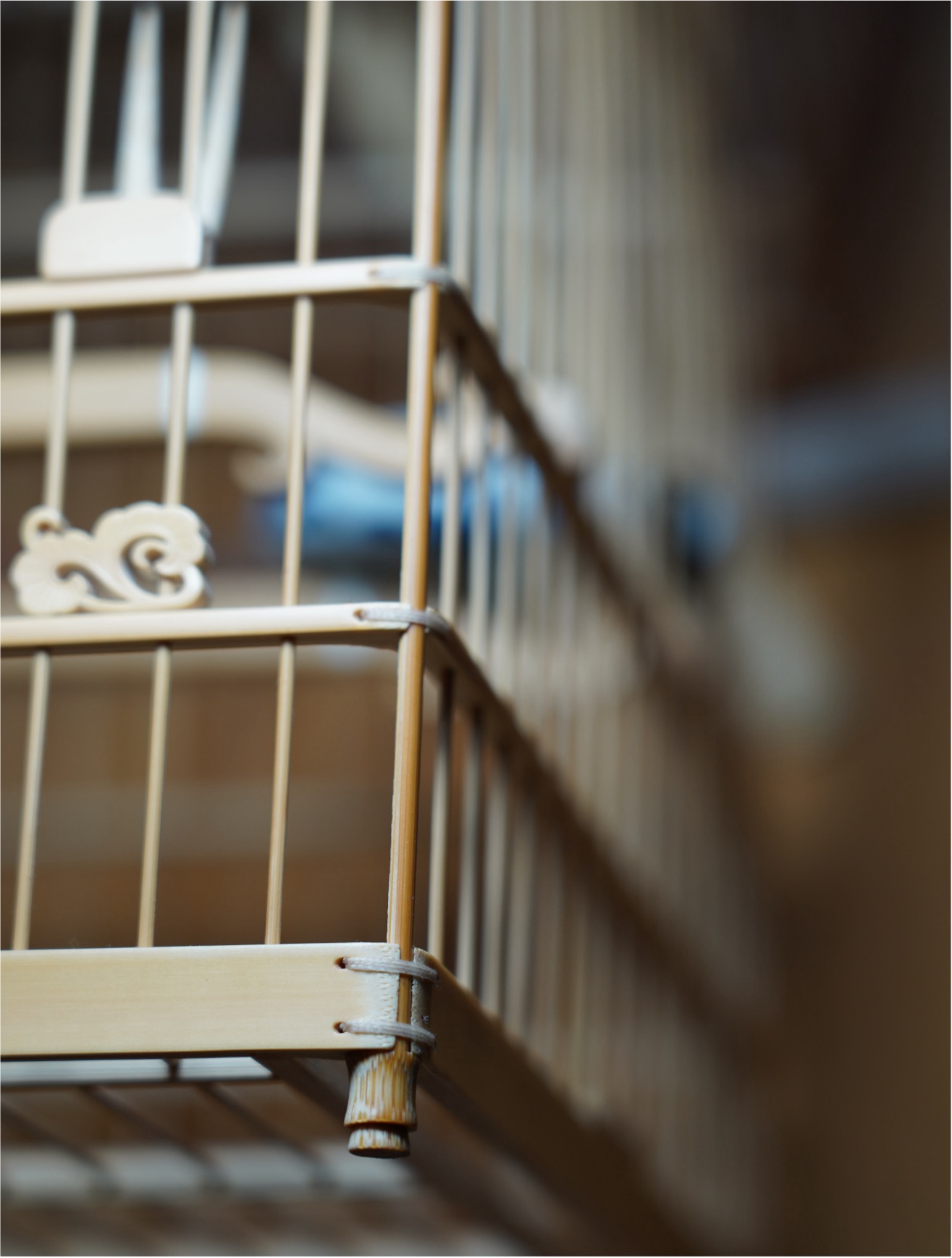
“构造”不仅仅出现在木构建筑中,一些中、小型的木作中也可以发现这种连接形式,如苏州鸟笼。其多用毛竹条或紫檀、红木,一般为立方体结构,“自重四两、载重五斗”。具体连接时,用细竹条或木条横竖交错穿插相连,构成精密紧实的鸟笼骨架,四角则用轻便灵活的细线绑紧。
"Construction" isn't limited to architecture; it's also found in medium and small wooden objects, like Suzhou birdcages. These are often cubic structures made of bamboo strips or precious woods like rosewood and red sandalwood. Thin bamboo or wood strips are interwoven to form the precise cage frame, with corners tightly bound with flexible fine thread.

“叠垒”与“组合”的结构则分别对应古代木构建筑中的“斗拱”,以及传统的瓜棱柱——即由中心四小柱加外嵌四辅瓣小料通过榫卯结构连接,共同组合成粗壮结实的整柱。
"Stacking" and "Jointing" structures correspond respectively to the "dougong" bracket system in ancient timber frames and the traditional "Melon-Section Column"—composed of a central core of four small columns joined by mortise-and-tenon with four outer segments to form a single, robust column.

瓜棱柱模型
立体连接之 编木
Three-dimensional Joinery: Weaving
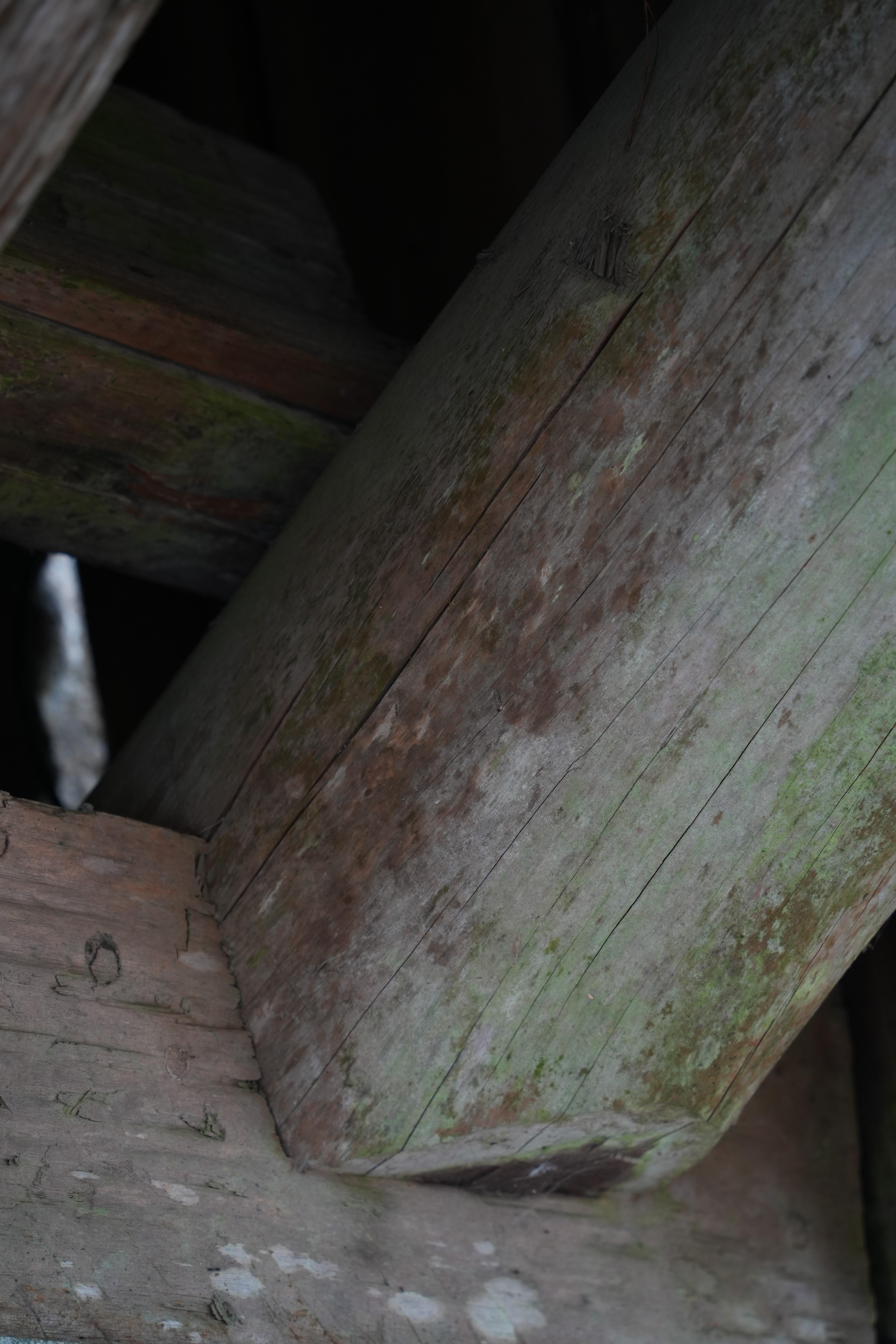
编木的连接方式存在于一种古老的木拱廊桥结构中。浙江地区多此类廊桥,特别是庆元,拥有中国现存单孔跨度最大的明代木拱廊桥(兰溪桥)。它不用一钉一铆,仅用圆木配合榫卯结构,巧妙搭接形成拱形结构,结构的固定完全依靠自身的强度和摩擦力,即使不用钉子也十分稳定。
The Weaving is found in the structure of ancient wooden arch corridor bridges. These bridges are common in Zhejiang province, particularly in Qingyuan, home to the Ming Dynasty Lanxi Bridge, which has the largest single span among existing wooden arch corridor bridges in China. Built without nails or rivets, it uses logs cleverly fitted with mortise-and-tenon joints to form the arch structure, relying entirely on its own strength and friction for stability.


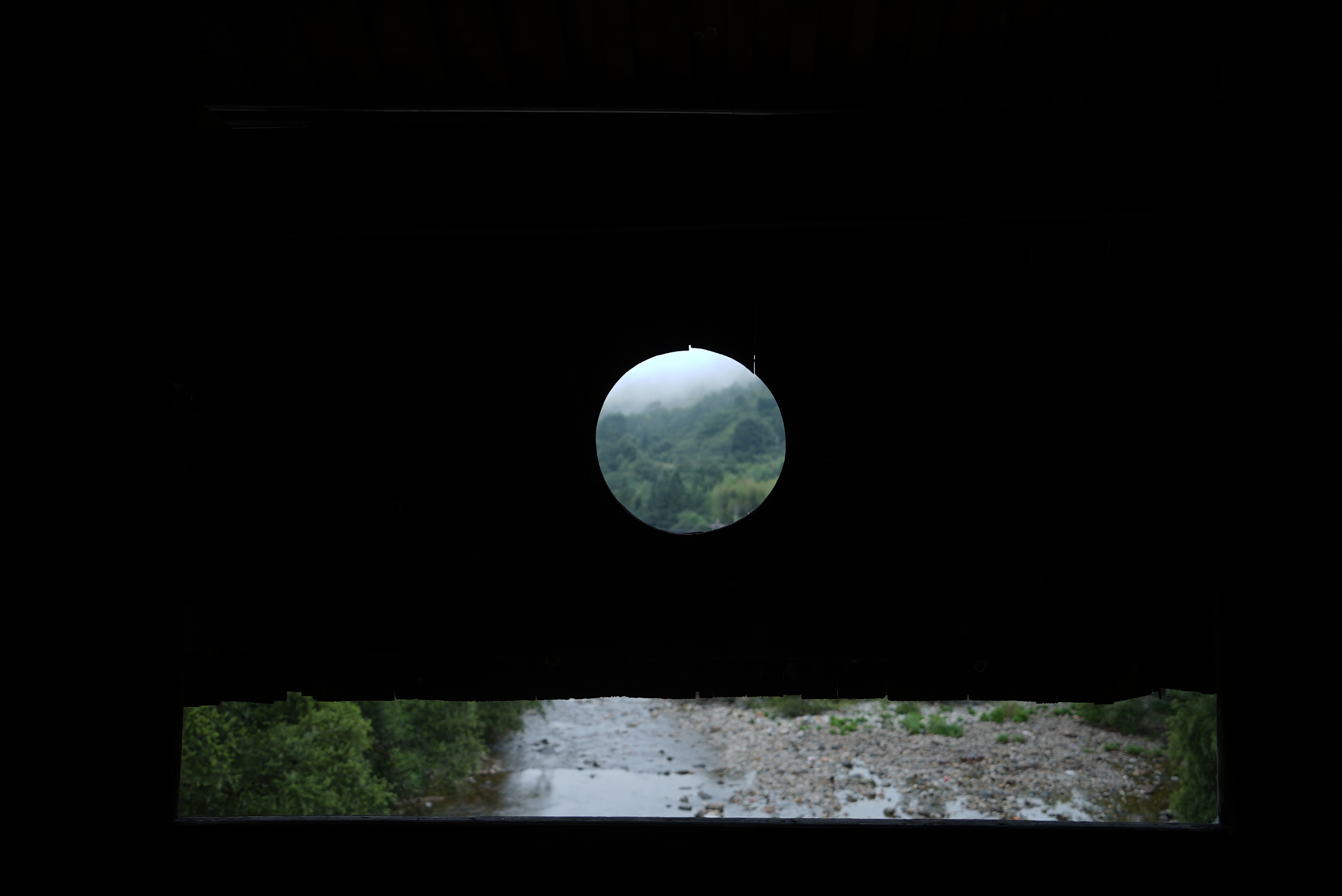

廊桥的营造一般是使用生长五十年以上的老杉木,且木材暴晒一年后才能用来搭桥。
Corridor bridges are typically built using old fir wood aged over 50 years, sun-dried for a year before use.


整体搭接过程先搭三节苗(主拱),再贯以五节苗(副拱),配合增加稳定性的将军柱和剪刀苗,形成受力均匀、造型美观的编织状桥底结构,最后再架设桥板。节点位置均用榫卯结构连接。
The assembly process involves first erecting the three-level main arch, then integrating the five-level secondary arch, supplemented with stabilizing king posts and diagonal braces, creating an evenly stressed, aesthetically pleasing woven bridge bottom structure. Bridge planks are then laid on top. All nodal points use mortise-and-tenon connections.




立体连接之 轴转、咬合
Three-dimensional Joinery: Rotation and Interlocking
立体连接的木结构,除了稳定的固定式结构,也有一些灵活可变的活动式结构,比如可以开合的折扇、变化表情的福建木偶,以及湖南地区一种可以循环转动的水车。
Beyond stable fixed structures, three-dimensional wooden structures also include flexible, movable ones, such as folding fans, expressive Fujian puppets, and a continuously rotating waterwheel from Hunan.
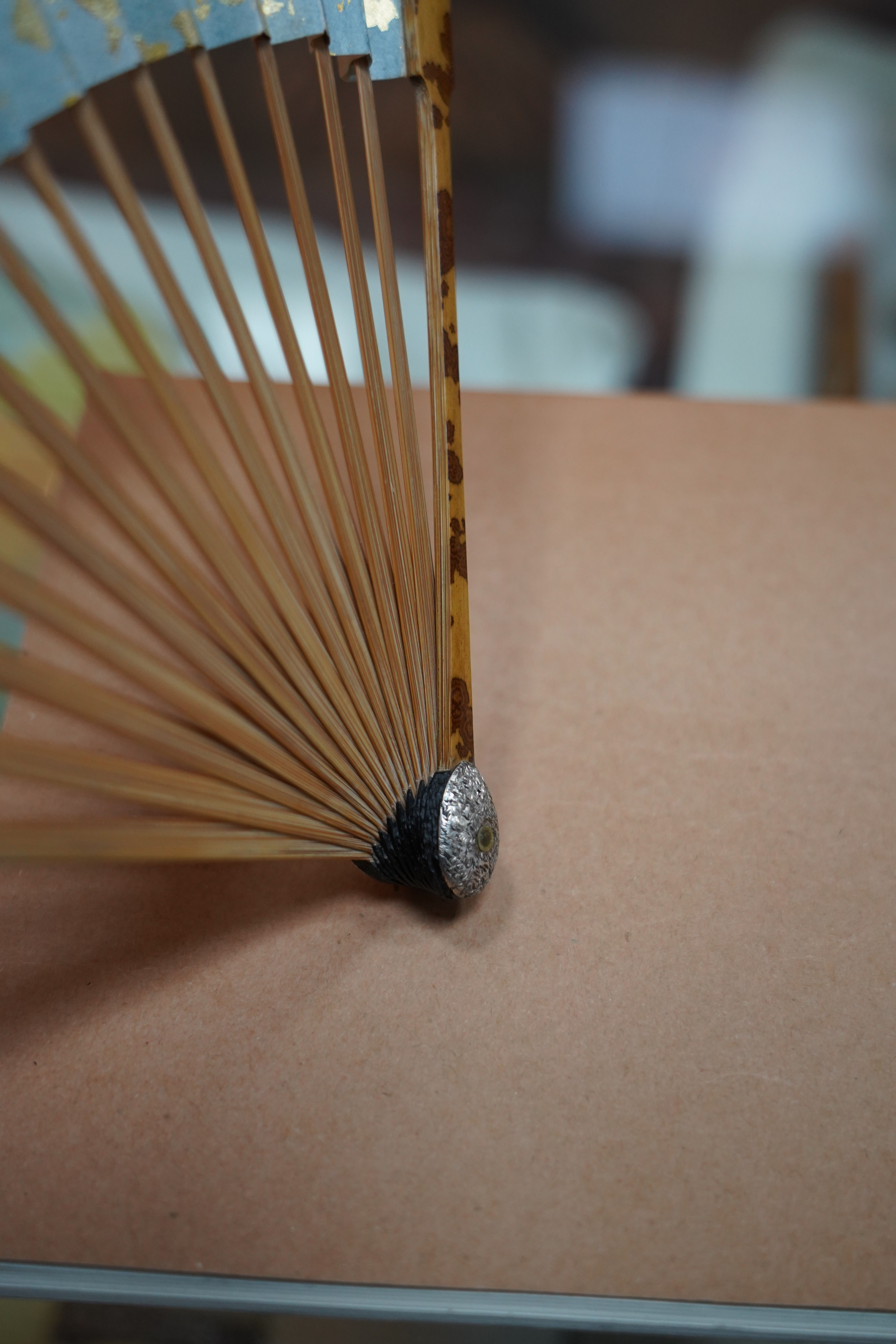
折扇即是将多支木条作为扇骨,尾部重叠、穿轴,形成可以平面开合的活动式“轴转”结构。
Folding fans use multiple wooden strips as ribs, overlapping at the tail and pierced by an axle, forming a movable "Rotation" structure that opens and closes flat.
使用了类似的“轴转”结构的还有福建泉州木偶戏所用的提线木偶,其头部结构是由木雕的眼睛、嘴巴等活动构件和与雕琢为中空的头部用小木条穿插连接起来的;用手指拨弄或用细线牵引,便可以支配五官活动。
A similar "Rotation" structure is used in the marionette heads for the Quanzhou puppet theater in Fujian. The head comprises movable carved wooden components (eyes, mouth) connected via small wooden strips to the hollowed-out head; manipulating them with fingers or strings activates the facial features.

另一种活动式的结构“咬合”可见于湖南邵阳的龙骨水车。这种水车用耐腐蚀的槐木制成龙骨板、岩脚和木轮,将它们通过活动的榫卯结构连接,便可以构造出循环传动的“龙骨”。
Another movable structure, "Interlocking," is seen in a waterwheel from Shaoyang, Hunan. Made from corrosion-resistant locust wood, its dragon bone plates, footings, and wooden wheels are connected by movable mortise-and-tenon joints, creating a cyclic transmission "dragon spine."

立体连接之 转向
Three-dimensional Joinery: Redirection
“转向”是指将木板以不同方向拼接、围合出立体空间的连接方式,小到家具物件如抽屉、木桶,大到船体等都会使用这种工艺,比如广州番禹上漖村的龙舟。
"Redirection" involves joining wood planks in different directions to enclose a three-dimensional space. This technique is used in objects ranging from furniture like drawers and barrels to large structures like boat hulls, exemplified by the dragon boats from Panyu, Guangzhou.
一百多年来,上漖村一直保留着传统的龙舟文化和制作技艺,造舟使用的主要材料是马来西亚进口的坤甸木,这种木头密度高、弹性好,可以长期泡在水中,甚至保存上百年。
For over a century, Shangjiao Village has preserved traditional dragon boat culture and craftsmanship. The primary material is imported Kapur wood from Malaysia, known for its high density, good elasticity, and ability to withstand long-term immersion in water, even preserving for centuries.


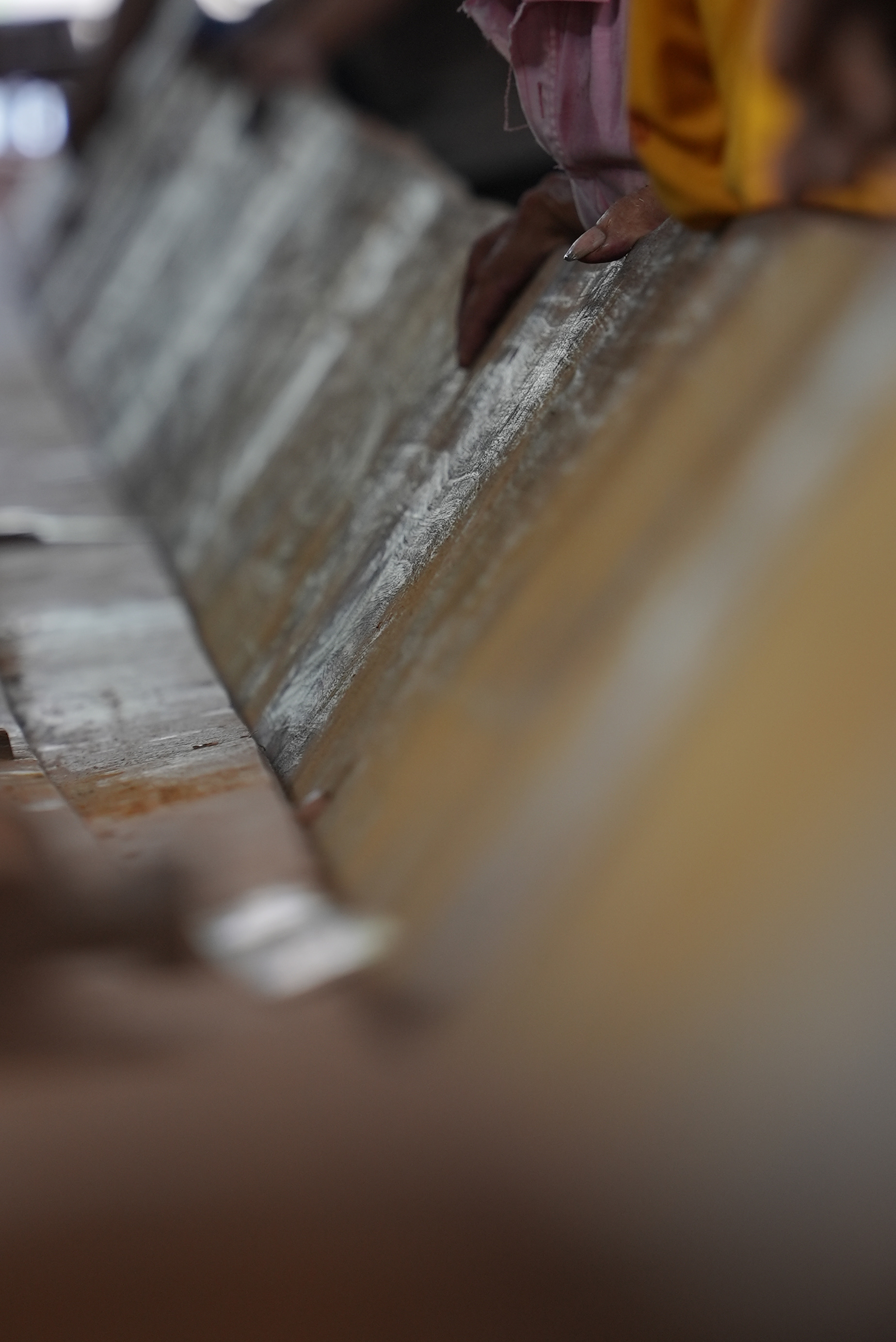
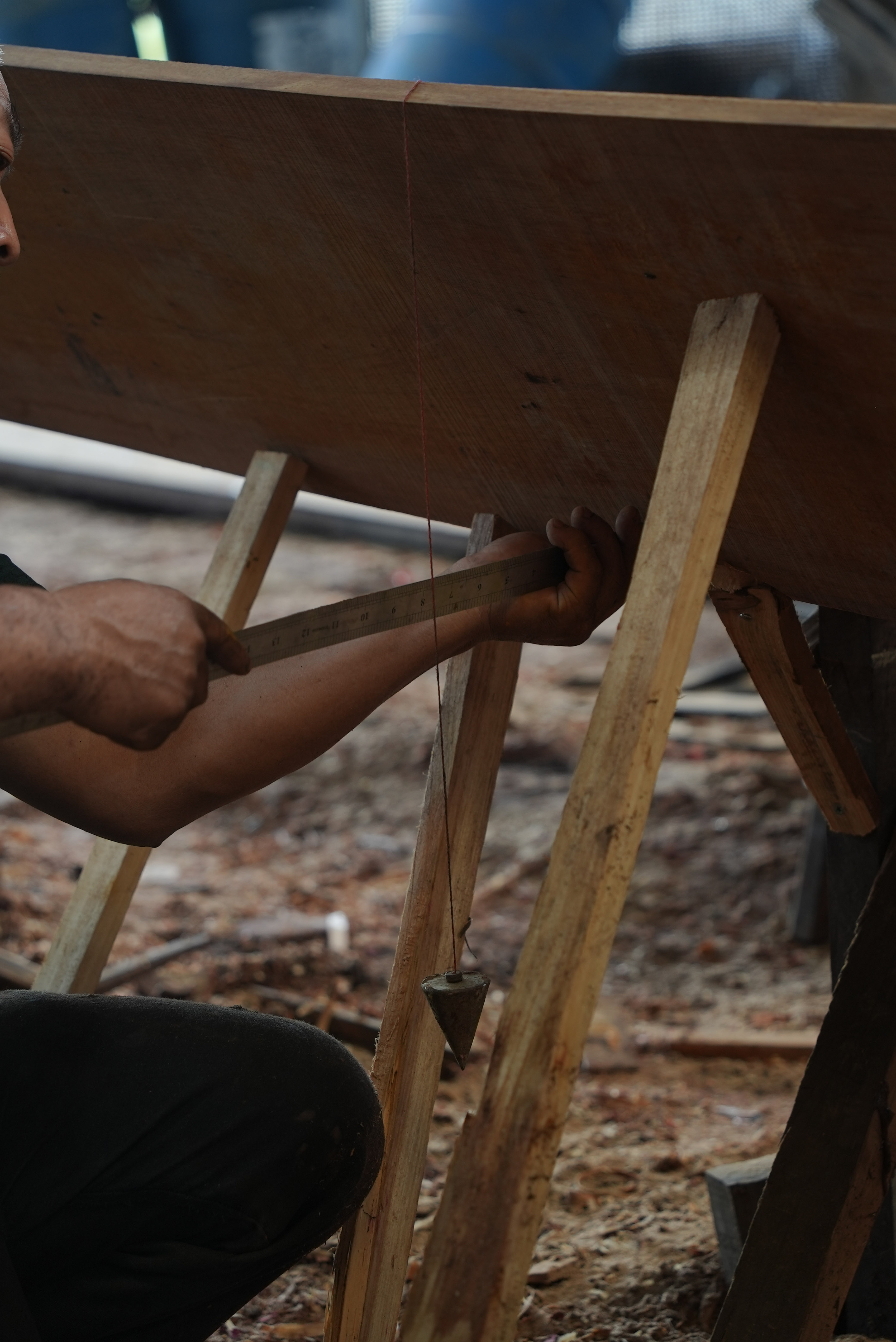
船身侧板、肋板及底板的连接便是将木板用“转向”的方式围合成舱,连接处通过铁钉进行辅助固定。
The hull's side plates, rib plates, and bottom plates are connected using the "Redirection" method to form the compartments, with joints reinforced using iron nails.

平面连接之 接长、拼合
Two-dimensional Joinery: End to End Joint and Assembly
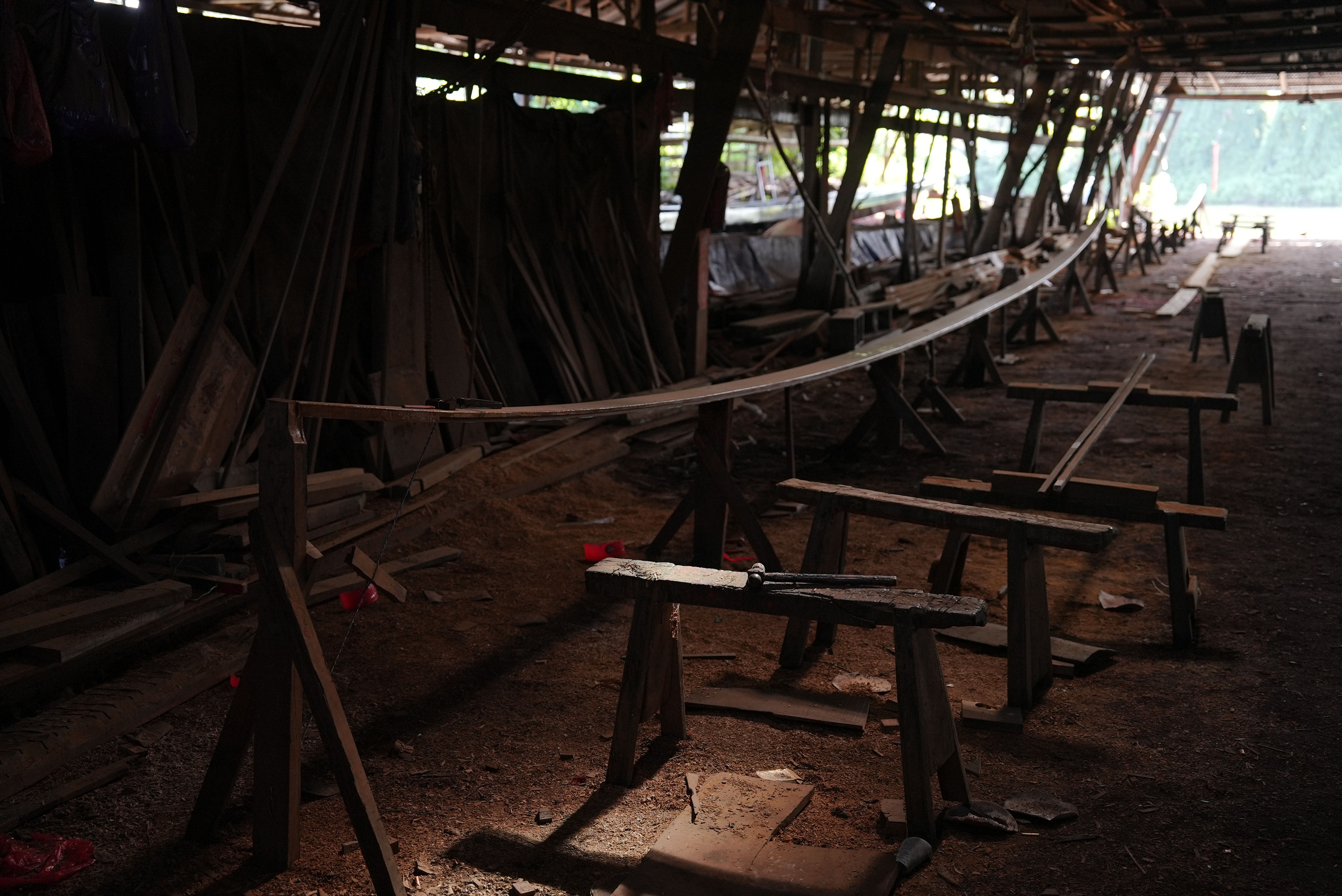
平面连接是指将尺寸有限的多个木料从平面的纬度拼接起来,制作成更长长度或更大面积的木制品。龙舟的制作也使用了这种连接,比如“接长”、“拼合”。仍然以广州上漖村为例,一条龙舟可以做到约四十米长,但木头是没有这种长度的,因此整条船身都是使用了独特技术拼接而成。
Two-dimensional joinery involves joining multiple pieces of limited-size wood along the planar dimension to create longer or larger wooden products. Dragon boat construction also uses these methods, namely "End to End Joint " and "Assembly." Again, using Shangjiao Village as an example, a dragon boat can reach about 40 meters long, a length unattainable with single wood pieces. Thus, the entire hull is pieced together using unique techniques.

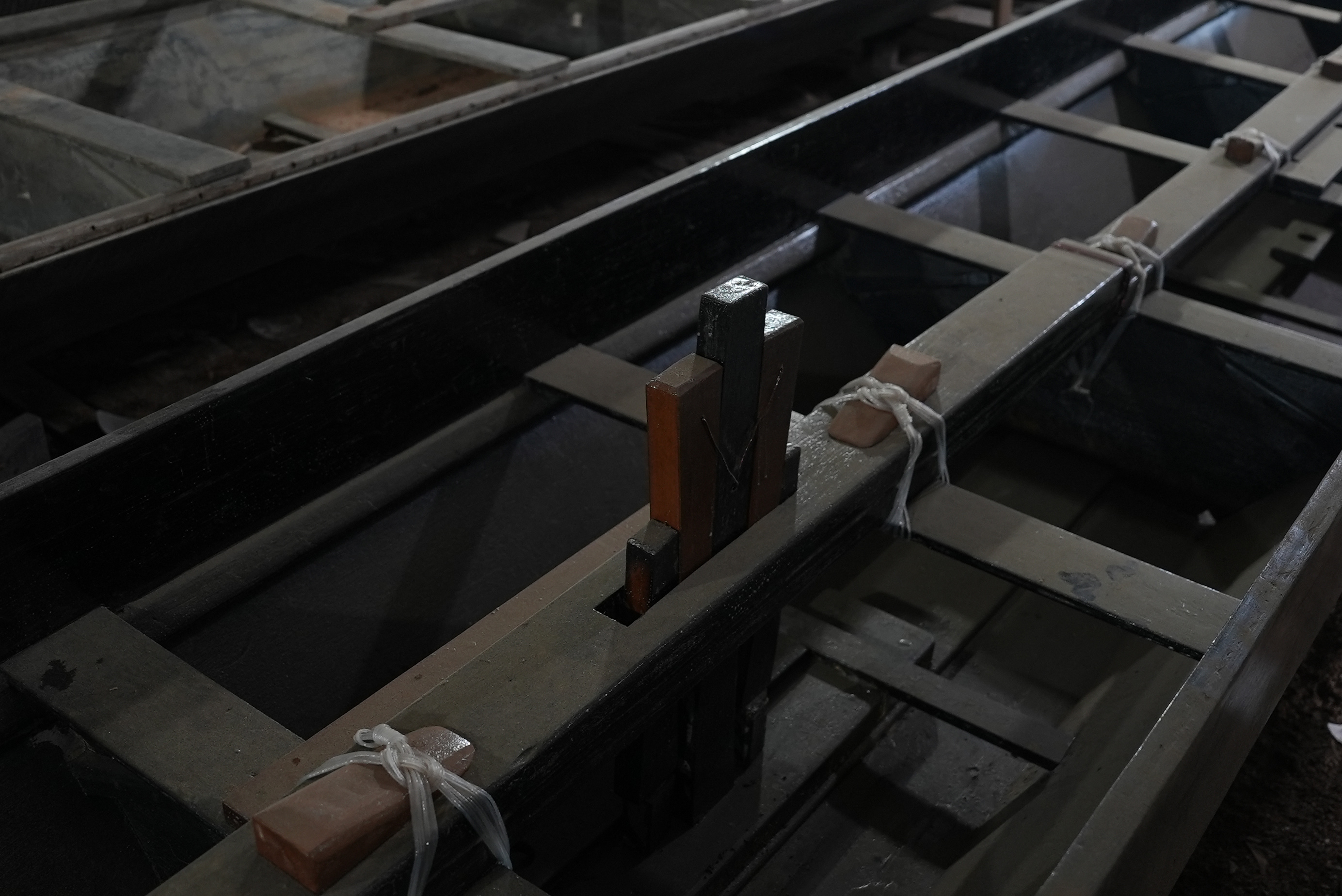
龙舟中心有一条纵向牵引的结构“龙缆”,可以让船体更加坚牢的同时,也做到在比赛时张弛有度。传统的上漖龙舟“龙缆”也是用多根厚实的坤甸木纵向拼接、延长而成,即为“接长”——两段木头的重叠段用将军柱固定,与隔仓板之间用绳结捆绑,并用木楔收紧。中国传统木制家具中也常见这种制作手法。
A central longitudinal structural member called the "Dragon Cable" runs through the boat, enhancing rigidity and providing controlled flexibility during races. Traditionally, the Shangjiao dragon boat's "Dragon Cable" is also made by longitudinally splicing and lengthening multiple thick Kapur wood pieces—this is "End to End Joint ." Overlapping sections of two wood pieces are fixed with wooden pegs, tied to bulkheads with rope knots, and tightened with wooden wedges. This technique is also common in traditional Chinese wooden furniture.


一条传统的龙舟之所以能够坚实、耐用,最关键的还是“掌口”的制作。船的底板、侧板均为双层板结构,其拼接口便是“掌口”。掌口的拼合不用粘合剂,而是利用榫卯结构的连接方法,靠人工在两片木板上凿出榫口,仔细打磨、嵌合、拼接,让两块木料紧密结合成一块——这便是一种“拼合”的连接形式——再用手工打造的铁钉加固,让木材即使在水中高速运动也不会散裂。
The crucial factor for a traditional dragon boat's sturdiness and durability lies in the "Zhangkou" joint. The boat's bottom and side plates are double-layered structures, and their joining seams are the "Zhangkou." These joints don't use adhesives but rely on mortise-and-tenon connections. Artisans manually carve matching mortises and tenons on two planks, carefully grind and fit them together, tightly joining two pieces into one—this is a "Assembly " joinery form. They are then reinforced with hand-forged iron nails, preventing the wood from splitting even during high-speed movement in water.

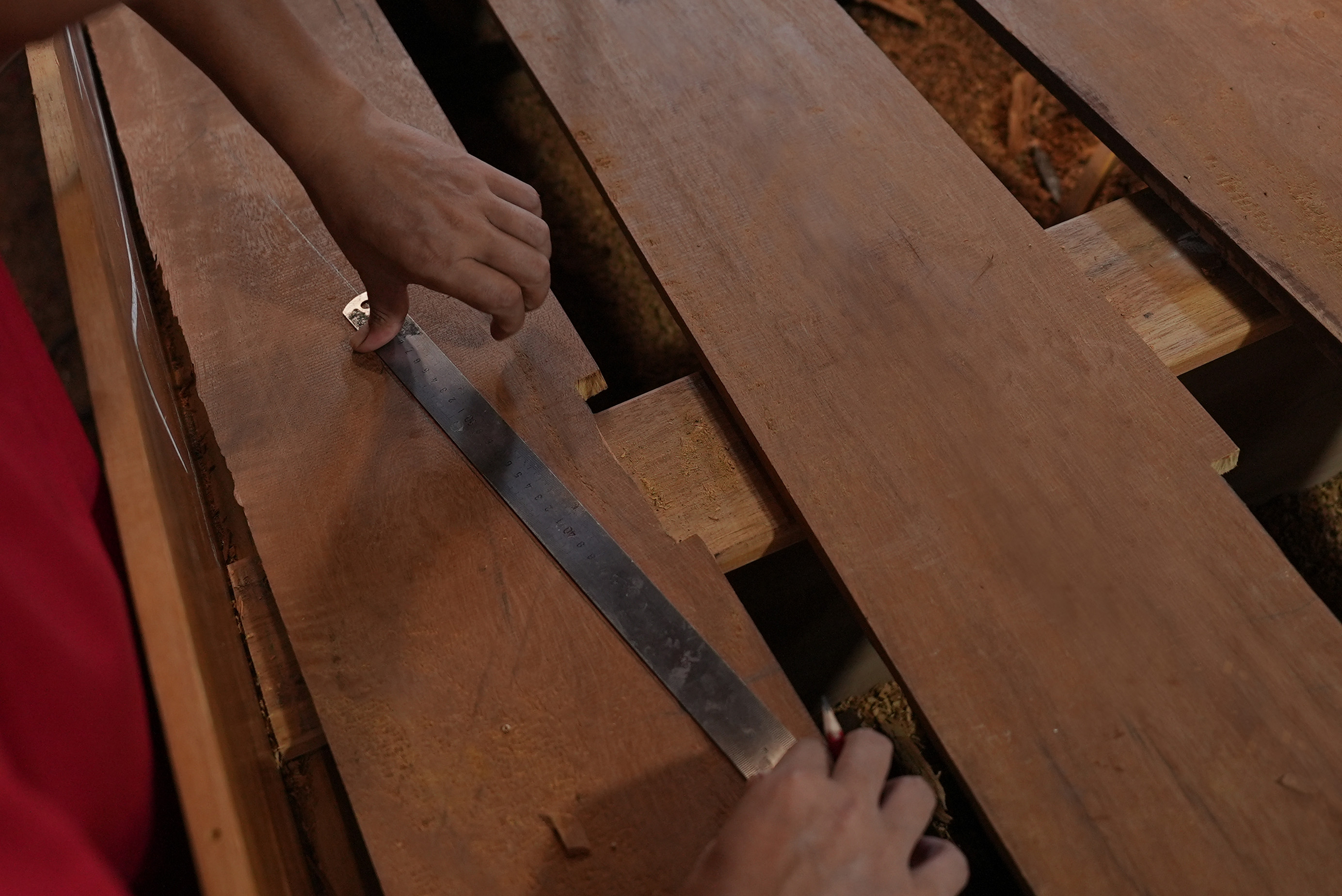
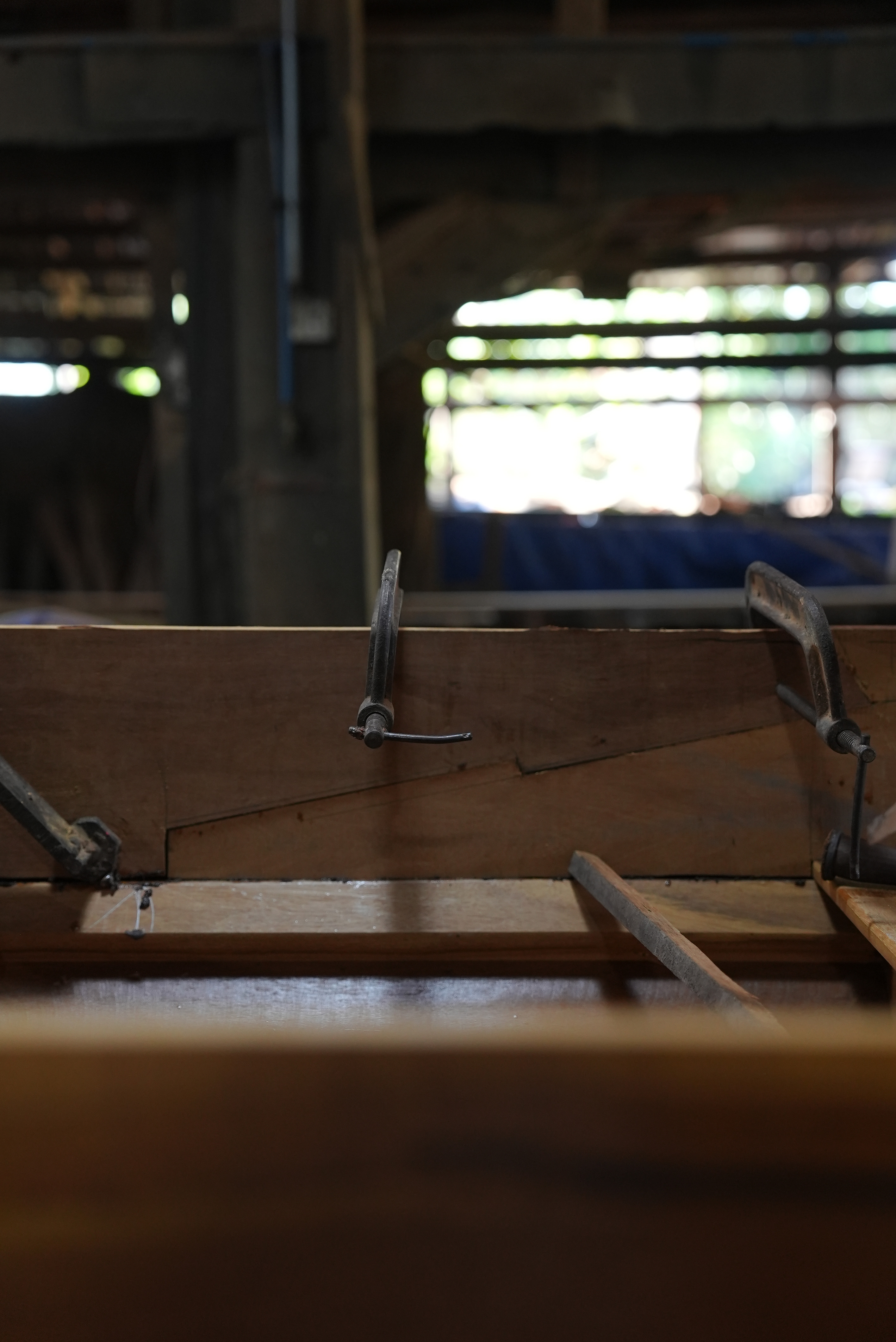


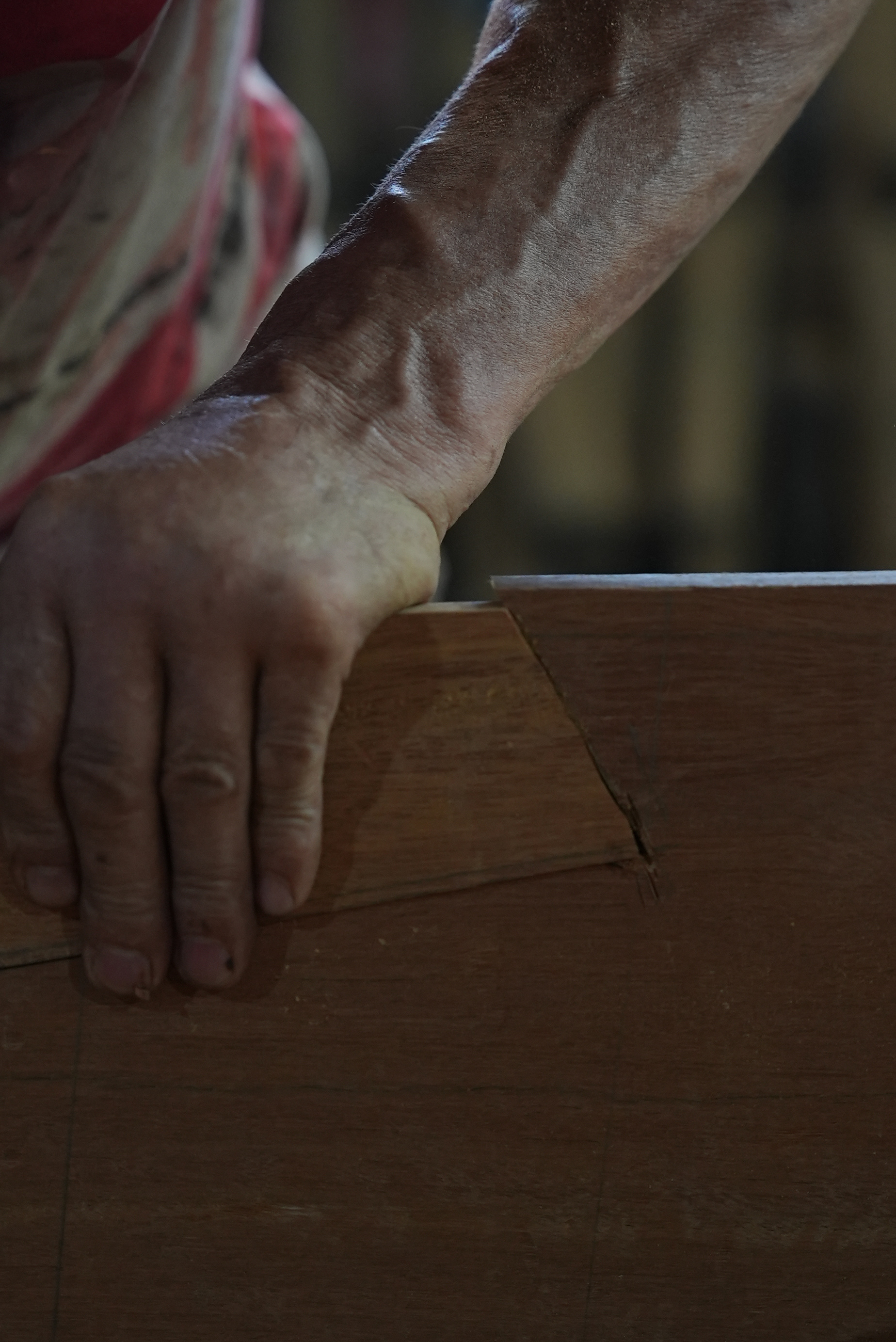
这种平面“拼合”的连接方式也用于一些木制家具的平面工艺,如苏州“千拼台”,就是用上千片不规则形状的木片,用榫卯结构连接,组合成一张精美的冰锭纹桌面。也有另一种“镂空式”的拼合,即传统苏州“花窗”的拼合手法:将精心设计的木料用榫卯结构拼接起来,形成大面积的镂空图案,比普通的拼合更具装饰性。
This planar "Assembly " technique is also used in furniture making, such as the Suzhou "Thousand-Piece Table," where thousands of irregularly shaped wood chips are joined by mortise-and-tenon to form an exquisite tabletop with an ice-crystal pattern. Another variant is Latticed Assembly , seen in traditional Suzhou lattice windows: meticulously designed wood pieces are joined via mortise-and-tenon to form large-area openwork patterns, offering greater decorativeness than standard assembly.
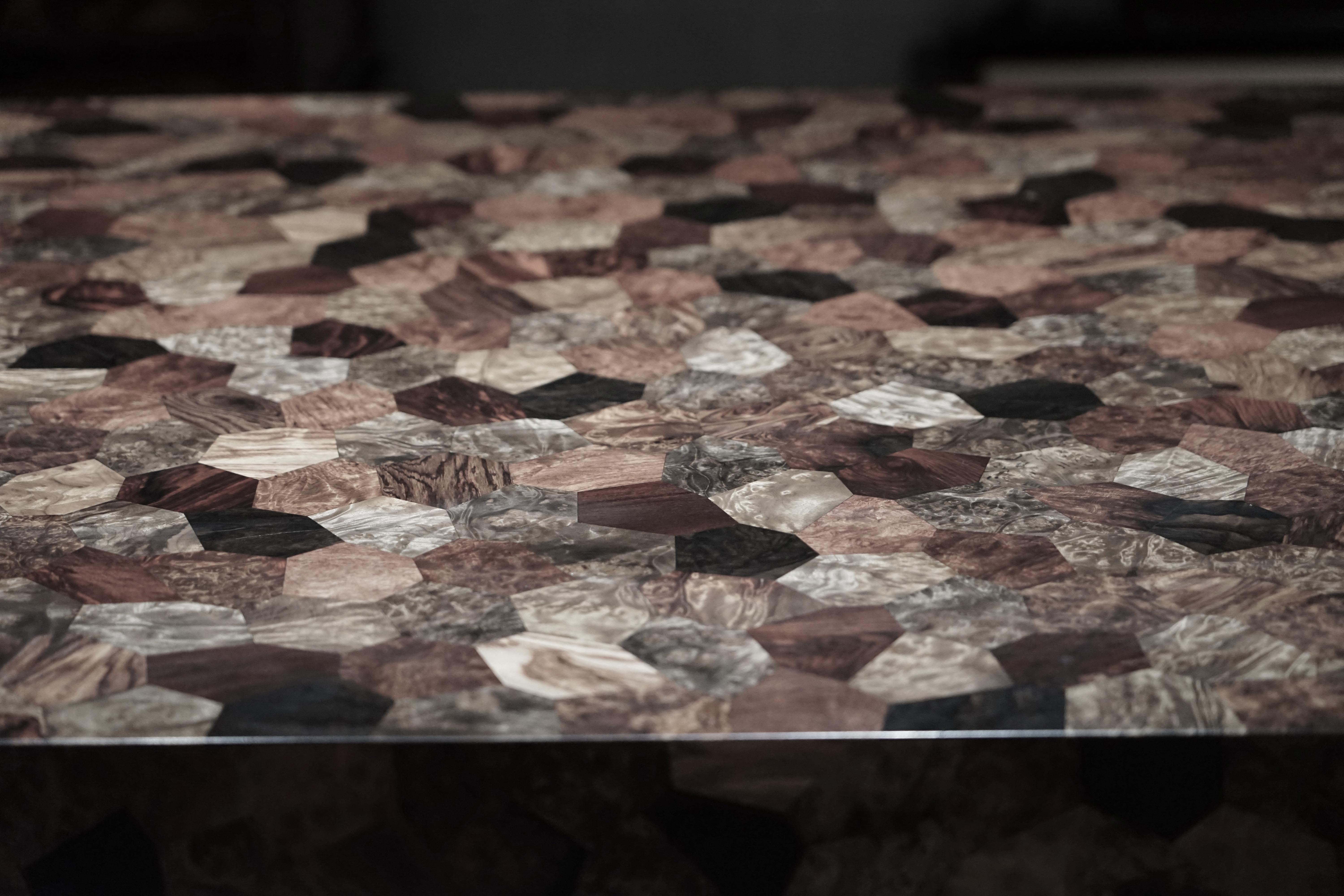
“千拼台”

传统苏州花窗的结构模型
平面连接之 合圈
Two-dimensional Joinery: Joint Ring
传统的团扇中存在一种独特的平面连接“合圈”,就是将弯曲的木条围合成一个圆形平面,形成扇面骨架,再通过榫卯的方式与扇柄连接。
A unique planar joinery, " joint ring ," is found in traditional round fans, where bent wood strips are formed into a circular plane to create the fan frame, which is then connected to the handle via mortise-and-tenon.

其他木的连接
Other Wood Joinery Forms
在我国北方的林地、草原地区,也存在多种颇具特色的木的连接形式,包括东北地区的井干式建筑,以及鄂伦春族、鄂温克族将桦树皮物尽其用,做成帐篷、船只、摇篮等,还有草原地区用“轴转”、“插卡”方式制作的蒙古包。
Various distinctive wood joinery forms also exist in the forested and grassland regions of Northern China. These include the log cabin (Jinggan-style) architecture of Northeast China, the Oroqen and Ewenki peoples' utilization of birch bark for tents, boats, cradles, etc., and the yurts of the grasslands, which utilize "Axle Rotation" and "Plug-in" assembly methods.

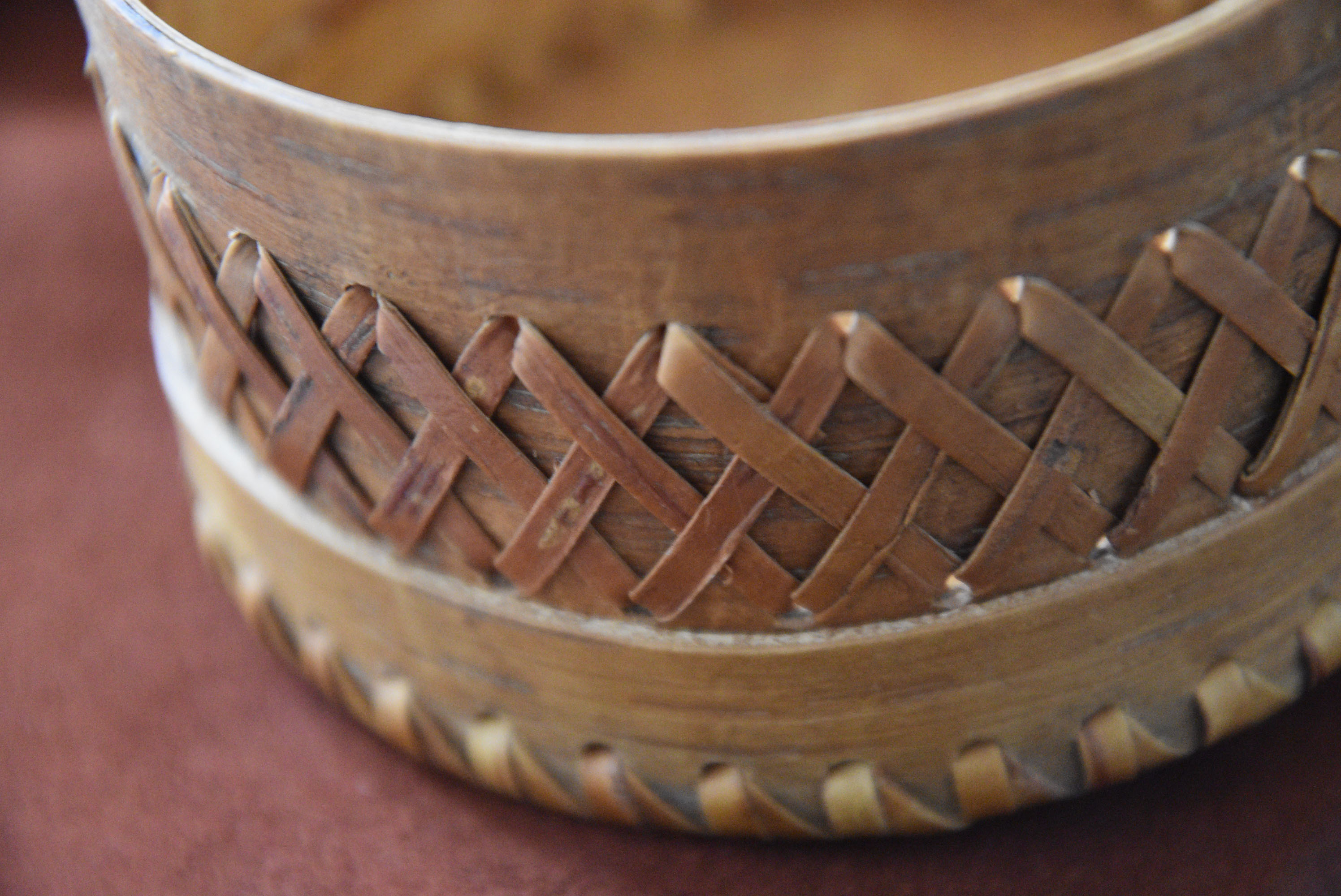

桦树皮制作的桶

Wood Joinery Research Outcomes
在对侗寨木构建筑、编木廊桥、传统龙舟等基于自然环境与地域文化的多种制木工艺进行考察和研究后,融设计图书馆和感物从立体、平面两个维度,对中国传统木作中的木的连接形式进行了分析与归纳,得到了木的连接研究图谱,并尝试制作了多种工艺样品,以此还原和展示研究中不同的连接结构。
After investigating and studying various woodcraft techniques based on natural environments and regional cultures—such as Dong village architecture, woven wood corridor bridges, and traditional dragon boats—the Rong Design Library and Ugan concept have analyzed and categorized the joinery forms in traditional Chinese woodcraft from both three-dimensional and two-dimensional perspectives. This resulted in a Wood Joinery Research Atlas, and various process samples were created to demonstrate and display the different joint structures studied.


“木的连接”研究图谱
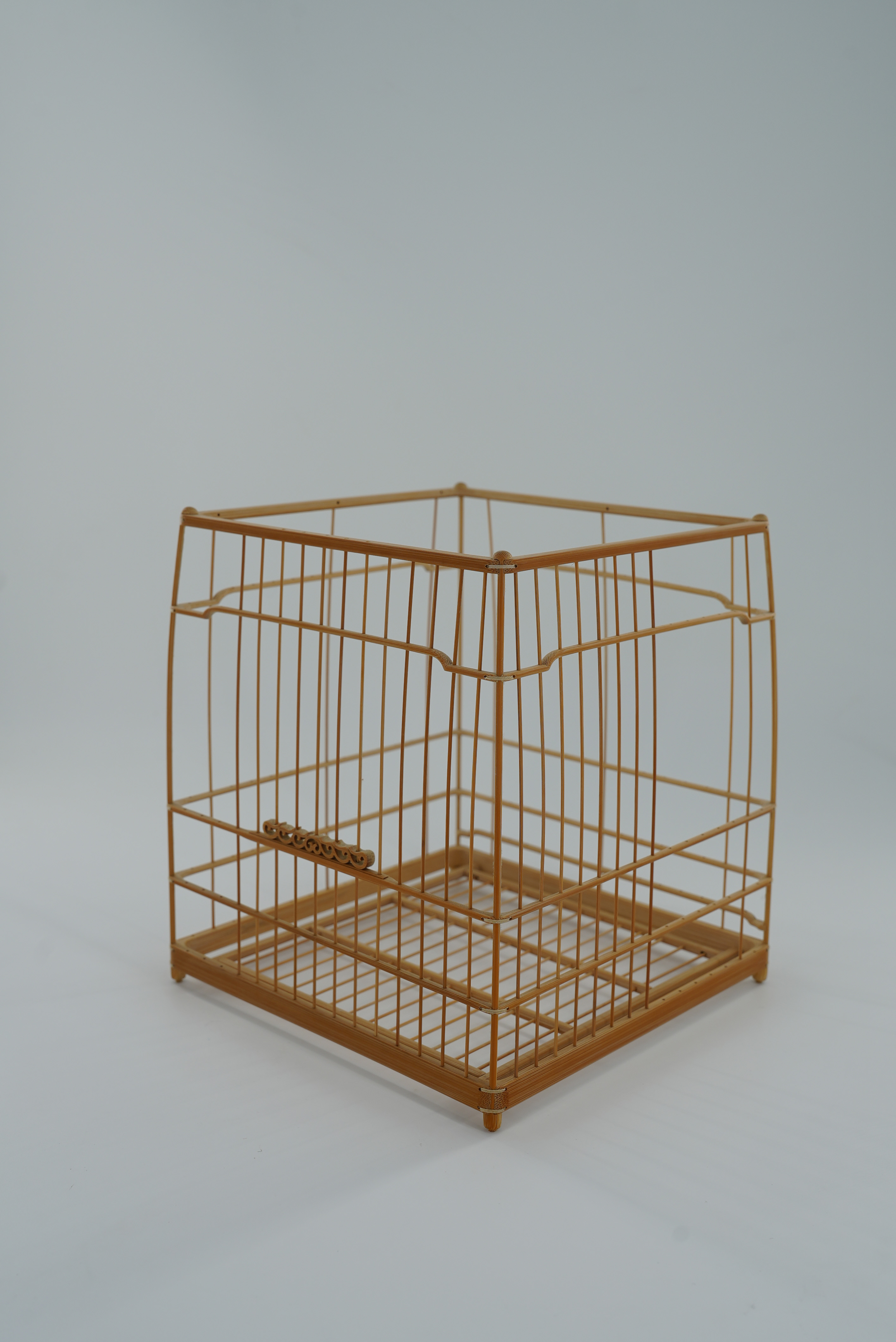
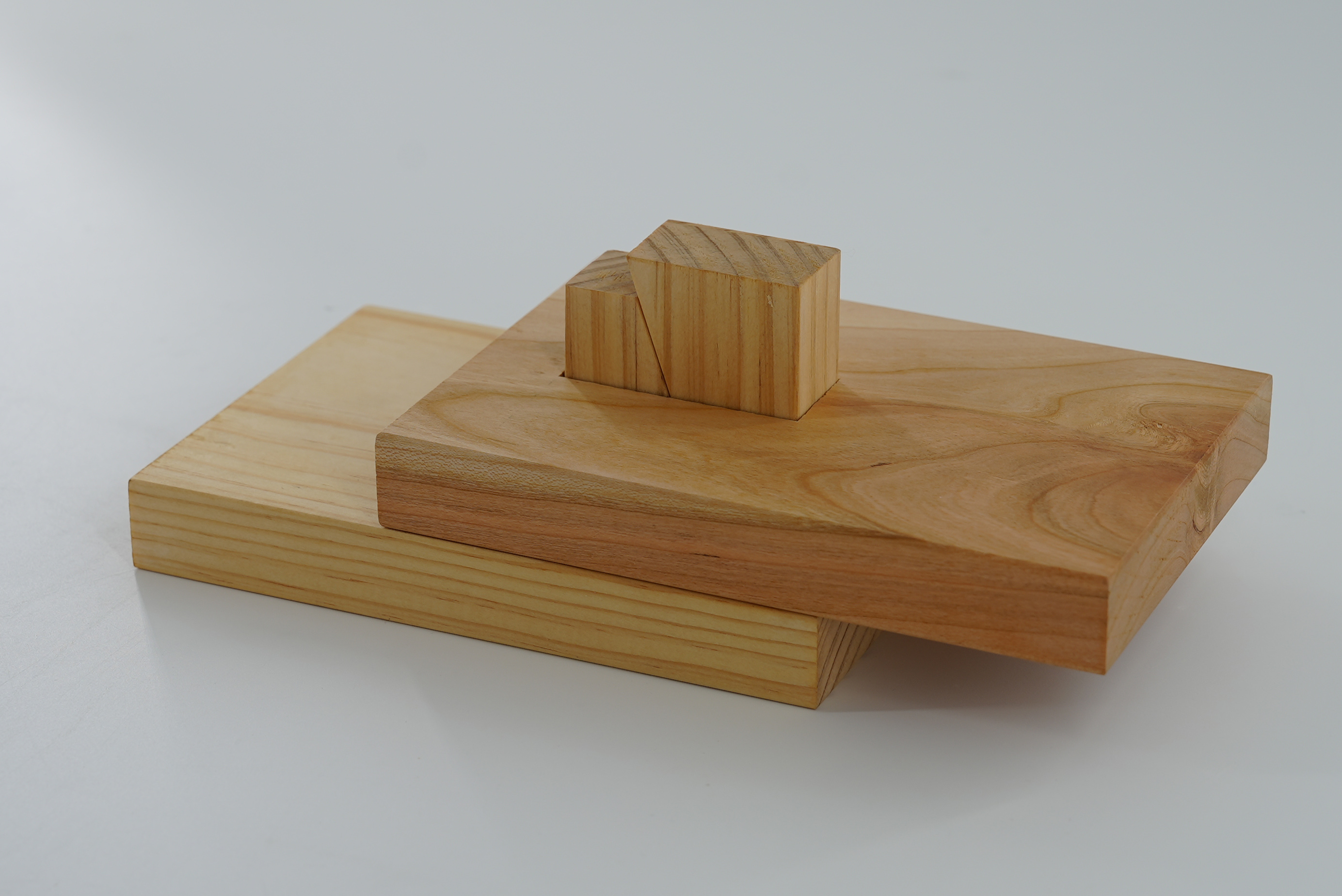


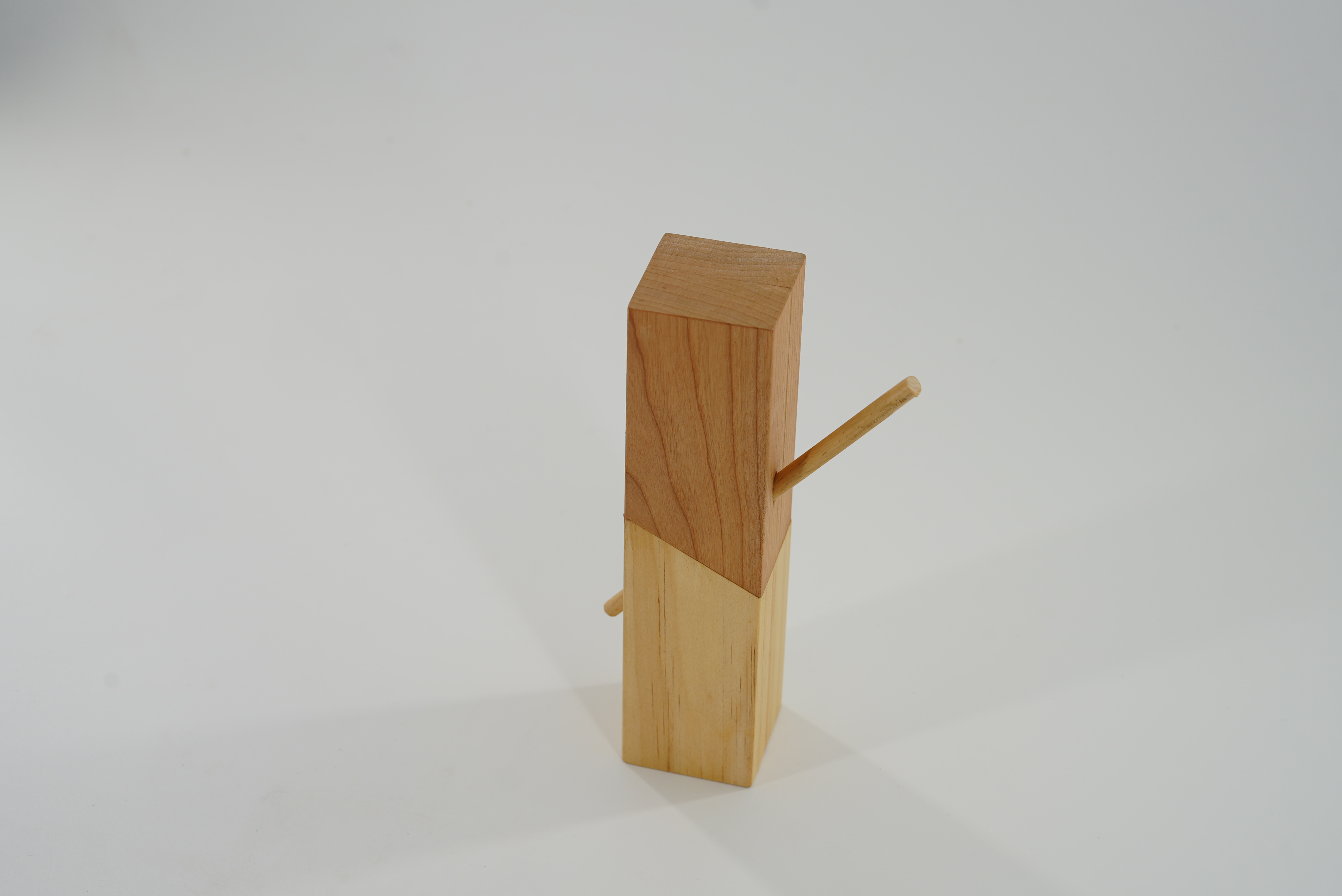
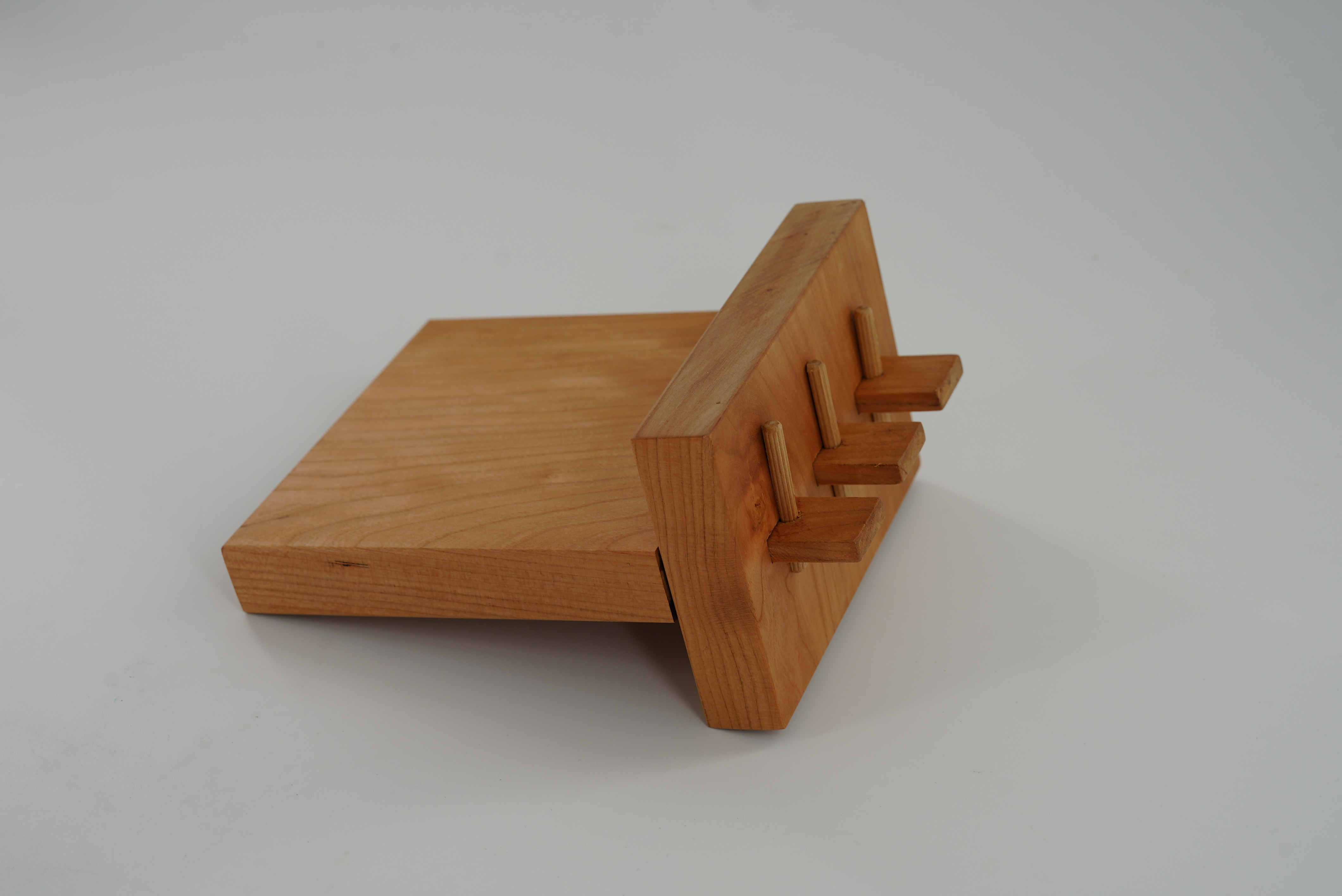


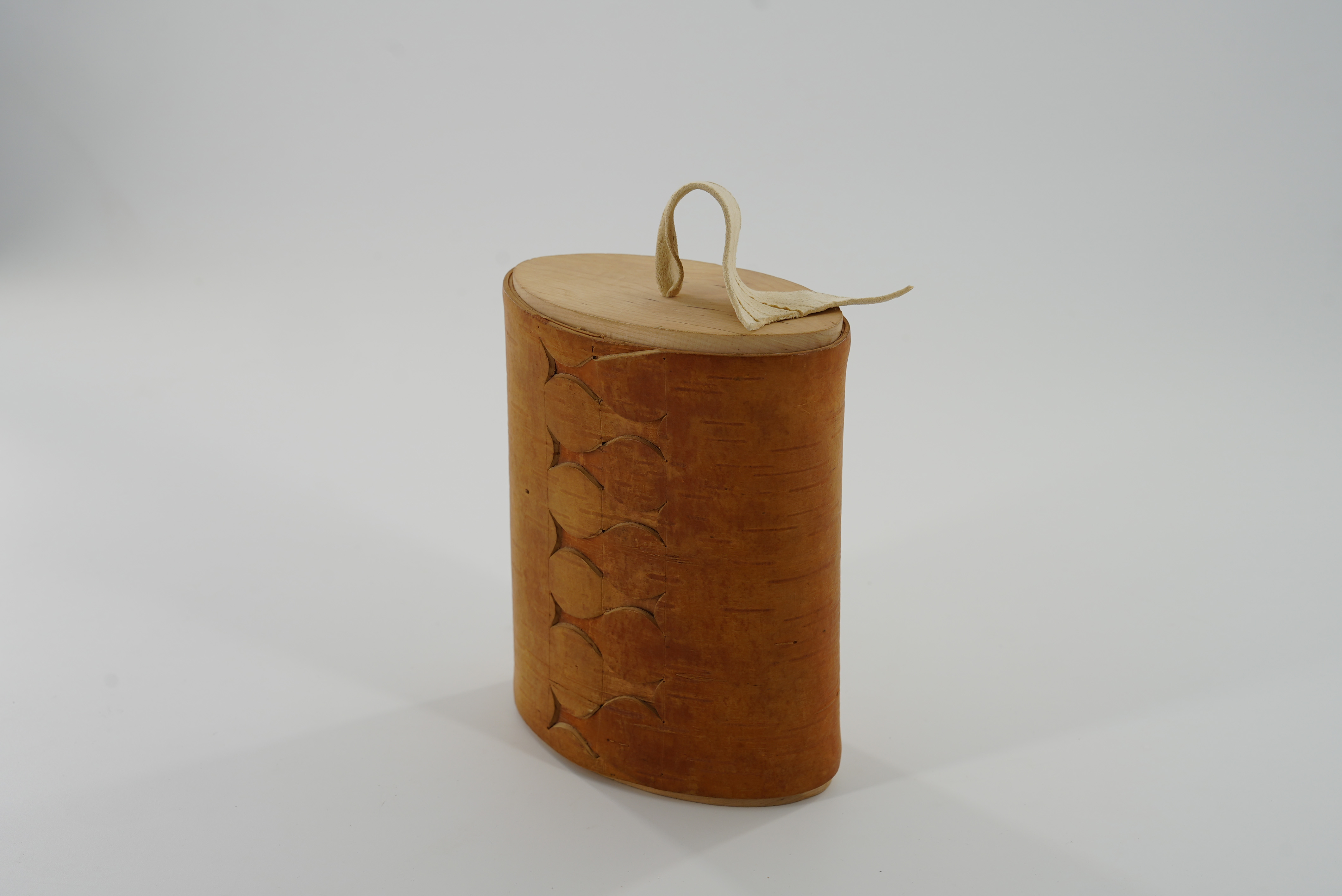
部分研究成果样品
此次“木的连接”主题研究探寻了不同地域和文化中的多种制木技艺及其所用的连接方法,并从当代设计的角度进行了梳理和总结。至此,感物支持融设计图书馆并共同参与的“中国传统手工艺材料之木材料”五年研究计划告一段落,而关于传统木材料的当代设计思考还在继续。
This "Wood Joinery" thematic research explored diverse woodcraft techniques and their associated joinery methods across different regions and cultures, systematically organized and summarizing them from a contemporary design perspective. With this, the five-year "Traditional Chinese Handicraft Material" research plan, supported by Ugan concept and co-participated with the Rong Design Library, concludes. However, the contemplation on the contemporary design applications of traditional wood materials continues.
摄影:王晨
特别鸣谢:融设计图书馆
Photography: Wang Chen
Special Thanks: Rong Design Library